সর্বশেষ আপডেট: ২৯ জুলাই, ২০২৬
বিটকয়েন ব্রোকার কী?
বিটকয়েন ব্রোকার হলো এমন একটি কোম্পানি যা ক্লায়েন্টদের বিটকয়েন ট্রেড করার সুযোগ দেয়, সাধারণত সিএফডি বা অন্য কোনো ডেরিভেটিভের মাধ্যমে, সরাসরি ক্রিপ্টোকারেন্সি কেনা ও সংরক্ষণ না করেই। ক্রিপ্টো এক্সচেঞ্জের বিপরীতে, একটি ব্রোকার সাধারণত লিভারেজড ট্রেডিং, ট্রেডিং প্ল্যাটফর্ম এবং স্টপ-লস ও টেক-প্রফিট অর্ডারের মতো রিস্ক-ম্যানেজমেন্ট টুলস প্রদান করে।
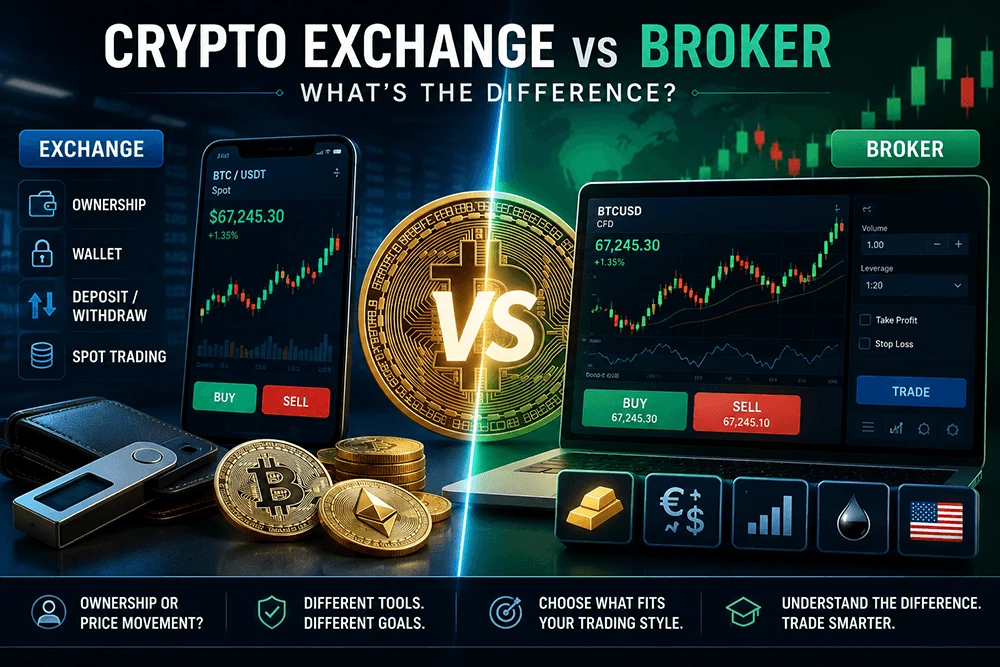
ক্রিপ্টো ট্রেডিং একটি এক্সচেঞ্জে সাধারণত প্রকৃত ক্রিপ্টোকারেন্সি কেনা এবং মালিকানাধীন করা জড়িত থাকে, অন্যদিকে একটি ব্রোকারের মাধ্যমে ক্রিপ্টো ট্রেডিং প্রায়ই অন্তর্নিহিত কয়েনের মালিকানা ছাড়াই মূল্য পরিবর্তনের উপর অনুমান করার উপর কেন্দ্রীভূত থাকে। এক্সচেঞ্জগুলো ক্রিপ্টোকারেন্সির মালিকানা ও স্থানান্তরের জন্য ডিজাইন করা হয়েছে, অন্যদিকে ব্রোকাররা সাধারণত ট্রেডিং টুলস, লিভারেজ অপশন এবং একাধিক বাজারে প্রবেশাধিকার প্রদান করে।
এক্সচেঞ্জগুলো মালিকানা, ওয়ালেট এবং স্থানান্তরের উপর কেন্দ্রীভূত থাকে, অন্যদিকে ব্রোকাররা সাধারণত মেটাট্রেডার ৪ (MT4) এবং মেটাট্রেডার ৫ (MT5)-এর মতো প্ল্যাটফর্মের মাধ্যমে ট্রেডিং টুলস, লিভারেজ অপশন এবং একাধিক বাজারে প্রবেশাধিকার প্রদান করে।
ক্রিপ্টো এক্সচেঞ্জ কী?
ক্রিপ্টো এক্সচেঞ্জ হলো এমন একটি মার্কেটপ্লেস যেখানে ব্যবহারকারীরা ক্রিপ্টোকারেন্সি কিনতে, বিক্রি করতে, স্থানান্তর করতে এবং সংরক্ষণ করতে পারেন।
আপনি যখন একটি এক্সচেঞ্জে বিটকয়েন কেনেন, তখন সাধারণত আপনি প্রকৃত ক্রিপ্টোকারেন্সির মালিক হন এবং তা অন্য কোনো ওয়ালেটে স্থানান্তর করতে বা ব্লকচেইন লেনদেনের জন্য ব্যবহার করতে পারেন।
সাধারণ এক্সচেঞ্জ কার্যক্রমের মধ্যে রয়েছে:
- বিটকয়েন বা ইথেরিয়াম কেনা
- ক্রিপ্টোকারেন্সি জমা ও উত্তোলন করা
- দীর্ঘমেয়াদে সম্পদ ধরে রাখা
- ওয়ালেটের মধ্যে কয়েন স্থানান্তর করা
ক্রিপ্টো ব্রোকার কী?
ক্রিপ্টো ব্রোকার হলো এমন একটি কোম্পানি যা ক্রিপ্টোকারেন্সি ট্রেডিং মার্কেটে প্রবেশাধিকার প্রদান করে।
ক্রিপ্টোকারেন্সির মালিকানার উপর কেন্দ্রীভূত হওয়ার পরিবর্তে, ব্রোকাররা প্রায়ই ট্রেডারদের সিএফডি ট্রেড করার এবং মূল্য পরিবর্তনের উপর অনুমান করার সুযোগ দেয়। প্রদত্ত পণ্যের উপর নির্ভর করে, ট্রেডারদের ওয়ালেট, ব্লকচেইন স্থানান্তর বা প্রাইভেট কী পরিচালনা করার প্রয়োজন নাও হতে পারে।
অনেক ব্রোকার একটি একক ট্রেডিং অ্যাকাউন্ট থেকে মুদ্রা, ধাতু, সূচক এবং স্টকের মতো অন্যান্য বাজারে প্রবেশাধিকারও প্রদান করে।
এক্সচেঞ্জ এবং ব্রোকারের মধ্যে প্রধান পার্থক্য কী?
প্রধান পার্থক্য হলো মালিকানা।
একটি এক্সচেঞ্জে, ট্রেডাররা সাধারণত যে ক্রিপ্টোকারেন্সি ট্রেড করেন তা কেনেন এবং তার মালিক হন।
একটি ব্রোকারের মাধ্যমে, ট্রেডাররা প্রায়ই সম্পদের মালিকানার পরিবর্তে মূল্য পরিবর্তনের উপর মনোযোগ দেন। তাদের ওয়ালেটে ক্রিপ্টো থাকতে পারে, কিন্তু তারা ক্রিপ্টোকারেন্সির সিএফডি ট্রেড করেন।
এই পার্থক্যটি ট্রেডাররা কীভাবে পজিশন পরিচালনা করেন, তহবিল স্থানান্তর করেন এবং ট্রেডিং টুলস ব্যবহার করেন তা প্রভাবিত করে।
ক্রিপ্টো এক্সচেঞ্জ বনাম ব্রোকার তুলনা সারণী
বৈশিষ্ট্য | ক্রিপ্টো এক্সচেঞ্জ | ক্রিপ্টো ব্রোকার |
ক্রিপ্টো মালিকানা | সাধারণত হ্যাঁ | প্রায়ই না |
ওয়ালেট প্রয়োজন | সাধারণত হ্যাঁ | সাধারণত না |
ব্লকচেইন স্থানান্তর | উপলব্ধ | সাধারণত প্রয়োজন হয় না |
কেন্দ্রবিন্দু | মালিকানা ও স্থানান্তর | মূল্য অনুমান |
লিভারেজ | পরিবর্তিত হয় | প্রায়ই উপলব্ধ |
মাল্টি-অ্যাসেট প্রবেশাধিকার | সাধারণত শুধু ক্রিপ্টো | প্রায়ই একাধিক অ্যাসেট শ্রেণী অন্তর্ভুক্ত থাকে |
ট্রেডিং প্ল্যাটফর্ম | এক্সচেঞ্জ ইন্টারফেস | MT4, MT5, ওয়েব প্ল্যাটফর্ম |
উপযুক্ত | বিনিয়োগকারী ও হোল্ডার | সক্রিয় ট্রেডার |
ব্রোকারের মাধ্যমে ট্রেড করার সময় আপনি কি ক্রিপ্টোকারেন্সির মালিক হন?
অনেক ক্রিপ্টো সিএফডি পণ্যের ক্ষেত্রে, ট্রেডাররা প্রকৃত কয়েন কেনার পরিবর্তে মূল্য পরিবর্তনের উপর অনুমান করেন।
উদাহরণস্বরূপ, একজন ট্রেডার একটি BTCUSD পজিশন খুলতে পারেন এবং ক্রিপ্টো ওয়ালেট পরিচালনা না করেই মূল্য বৃদ্ধি বা হ্রাস থেকে সম্ভাব্য লাভ করতে পারেন।
এই পদ্ধতিটি সেইসব ট্রেডারদের কাছে আকর্ষণীয় হতে পারে যারা ক্রিপ্টোকারেন্সির মালিকানার পরিবর্তে বাজারের গতিবিধি এবং তা থেকে উপার্জনে বেশি আগ্রহী।
ক্রিপ্টো সিএফডি বনাম স্পট ক্রিপ্টো ট্রেডিং
ব্রোকার এবং এক্সচেঞ্জের মধ্যে অন্যতম বড় পার্থক্য হলো ট্রেড করা পণ্যের ধরন।
বেশিরভাগ এক্সচেঞ্জ স্পট ক্রিপ্টোকারেন্সি ট্রেডিংয়ের উপর কেন্দ্রীভূত থাকে, যেখানে ব্যবহারকারীরা প্রকৃত কয়েন কেনেন এবং তার মালিক হন। অনেক ব্রোকার ক্রিপ্টো সিএফডি অফার করে, যা ট্রেডারদের অন্তর্নিহিত ক্রিপ্টোকারেন্সির মালিকানা ছাড়াই মূল্য পরিবর্তনের উপর অনুমান করার সুযোগ দেয়।
বৈশিষ্ট্য | স্পট ক্রিপ্টো ট্রেডিং | ক্রিপ্টো সিএফডি |
মালিকানা | হ্যাঁ | না |
ওয়ালেট প্রয়োজন | সাধারণত হ্যাঁ | না |
ব্লকচেইন স্থানান্তর | হ্যাঁ | না |
লং পজিশন | হ্যাঁ | হ্যাঁ |
শর্ট পজিশন | প্রায়ই সীমিত | সাধারণত উপলব্ধ |
লিভারেজ | সীমিত বা নেই | প্রায়ই উপলব্ধ |
সংরক্ষণের দায়িত্ব | ব্যবহারকারী | প্রয়োজন নেই |
মূল লক্ষ্য | মালিকানা ও বিনিয়োগ | মূল্য পরিবর্তনে ট্রেডিং |
এই পার্থক্যটি বোঝা ট্রেডারদের তাদের লক্ষ্যের সাথে সবচেয়ে উপযুক্ত সমাধান বেছে নিতে সাহায্য করতে পারে।
এক্সচেঞ্জের মাধ্যমে ক্রিপ্টো ট্রেড করার সুবিধাগুলো কী কী?
যেসব ব্যবহারকারী সরাসরি ক্রিপ্টোকারেন্সির মালিক হতে চান, তাদের জন্য এক্সচেঞ্জ উপযুক্ত হতে পারে।
সম্ভাব্য সুবিধার মধ্যে রয়েছে:
- অন্তর্নিহিত সম্পদের মালিকানা
- ওয়ালেটের মধ্যে কয়েন স্থানান্তরের সক্ষমতা
- ব্লকচেইন-ভিত্তিক কার্যক্রমে প্রবেশাধিকার
- দীর্ঘমেয়াদী হোল্ডিং কৌশল
✅ তবে, ক্রিপ্টো এক্সচেঞ্জ কখনও কখনও হ্যাক হয়, যার ফলে ব্যবহারকারীদের তহবিল চুরি হতে পারে।
ব্রোকারের মাধ্যমে ক্রিপ্টো ট্রেড করার সুবিধাগুলো কী কী?
যেসব ট্রেডার সম্পদের মালিকানার পরিবর্তে বাজারের সুযোগের উপর মনোযোগী, তাদের জন্য ব্রোকার উপযুক্ত হতে পারে।
সম্ভাব্য সুবিধার মধ্যে রয়েছে:
- ওয়ালেট পরিচালনার প্রয়োজন নেই
- MT4 এবং MT5-এর মতো ট্রেডিং প্ল্যাটফর্মে প্রবেশাধিকার
- একটি অ্যাকাউন্ট থেকে একাধিক অ্যাসেট শ্রেণীতে ট্রেড করার সক্ষমতা
- লিভারেজ অপশন, যেখানে উপলব্ধ
- ঊর্ধ্বমুখী এবং নিম্নমুখী উভয় বাজারে অনুমান করার সক্ষমতা
ব্যবহারিক উদাহরণ: MT5 ব্যবহার করে ব্রোকারের মাধ্যমে BTCUSD ট্রেড করা
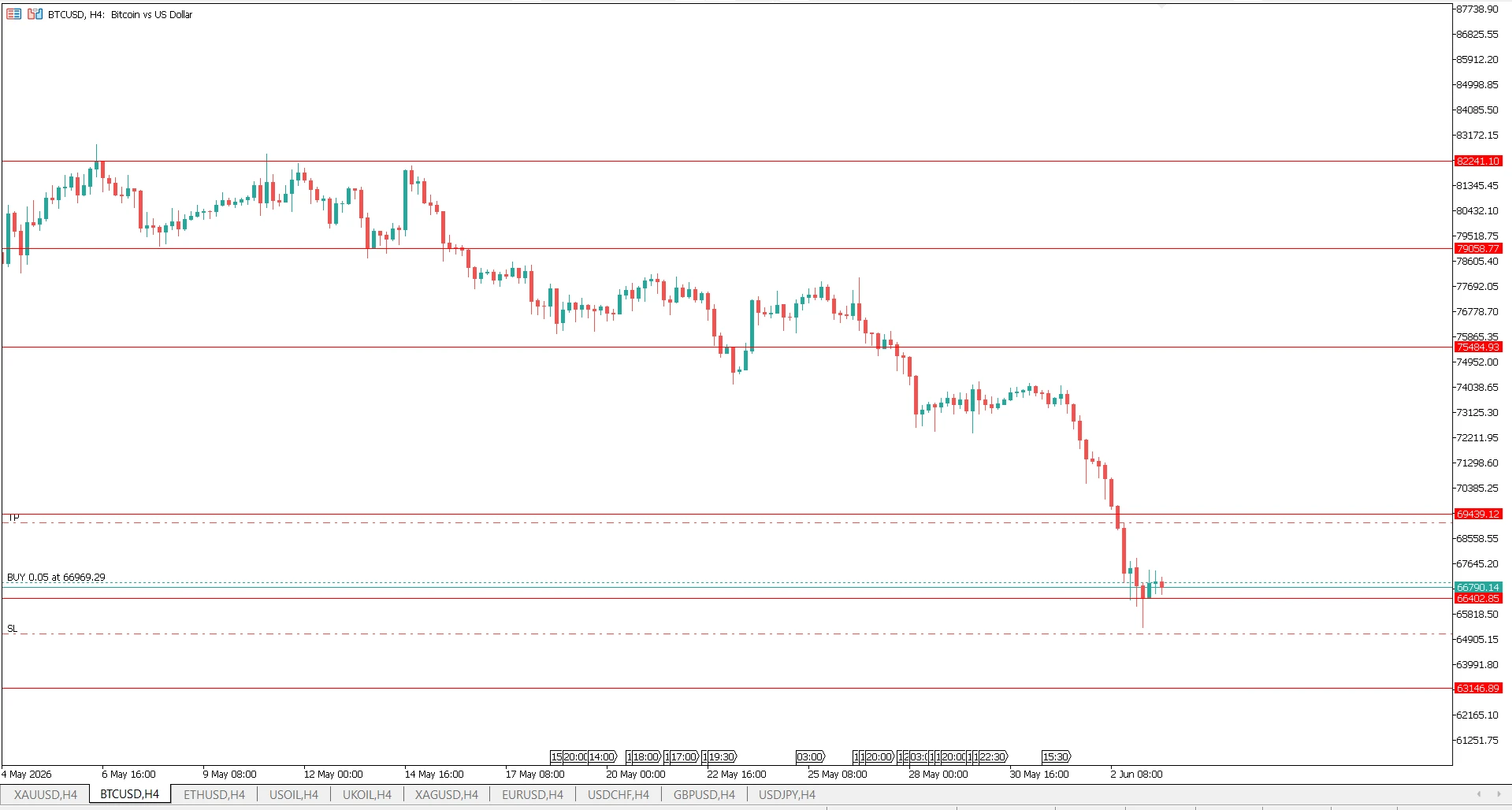
নিচের স্ক্রিনশটে একটি ব্রোকারের মাধ্যমে মেটাট্রেডার ৫ (MT5)-এ খোলা একটি প্রকৃত BTCUSD ট্রেড দেখানো হয়েছে।
এই উদাহরণে, ট্রেডার 66,400–66,800 এর কাছাকাছি একটি সম্ভাব্য সাপোর্ট জোন চিহ্নিত করেন এবং 66,969.29-এ একটি বাই পজিশন খোলেন। বাজার আরও নিচে নামলে ঝুঁকি সীমিত রাখতে সাপোর্টের নিচে 65,800-এর কাছাকাছি একটি স্টপ-লস স্থাপন করা হয়েছিল।
ট্রেডারের লক্ষ্য বিটকয়েন অর্জন বা সংরক্ষণ করা নয়। পরিবর্তে, পজিশনটি সম্পূর্ণরূপে এই প্রত্যাশার উপর ভিত্তি করে তৈরি যে BTCUSD সাপোর্ট এলাকা থেকে ঘুরে দাঁড়িয়ে উপরে উঠতে পারে।
এই উদাহরণটি ব্রোকারের মাধ্যমে ক্রিপ্টো ট্রেড করা এবং ক্রিপ্টো এক্সচেঞ্জ ব্যবহার করার মধ্যে অন্যতম মূল পার্থক্য তুলে ধরে। ট্রেডার বিটকয়েনের মালিকানা, কয়েন স্থানান্তর বা ক্রিপ্টোকারেন্সি ওয়ালেট পরিচালনার পরিবর্তে মূল্যের গতিবিধি বিশ্লেষণ, ঝুঁকি ব্যবস্থাপনা এবং বাজারের গতিবিধি থেকে মুনাফা অর্জনের উপর মনোযোগী।
যদি বাজার উপরে ওঠে, তাহলে ট্রেডটি মুনাফা তৈরি করতে পারে। যদি বিটকয়েন ক্রমাগত পড়তে থাকে এবং স্টপ-লস লেভেলে পৌঁছায়, তাহলে ট্রেডটি একটি পূর্বনির্ধারিত ক্ষতিতে বন্ধ হয়ে যাবে। ফলাফল নির্ভর করে মূল্যের গতিবিধির উপর, ক্রিপ্টোকারেন্সির মালিকানার উপর নয়।
আপনার কি ক্রিপ্টো এক্সচেঞ্জ নাকি ব্রোকার বেছে নেওয়া উচিত?
সেরা পছন্দ নির্ভর করে আপনার লক্ষ্যের উপর।
- যদি আপনি ক্রিপ্টোকারেন্সি কিনতে, মালিক হতে এবং স্থানান্তর করতে চান, তাহলে একটি ক্রিপ্টো এক্সচেঞ্জ বেছে নিন।
- যদি আপনার প্রধান লক্ষ্য কয়েন ধরে রাখার পরিবর্তে ট্রেড করে মুনাফা অর্জন করা হয়, তাহলে একটি ব্রোকার বেছে নিন।
- যদি আপনি দীর্ঘমেয়াদে ক্রিপ্টোকারেন্সি সংরক্ষণের পরিকল্পনা করেন, তাহলে একটি এক্সচেঞ্জ বেছে নিন।
- যদি আপনি একটি একক অ্যাকাউন্ট থেকে ট্রেডিং টুলস, চার্টিং এবং একাধিক অ্যাসেট শ্রেণীতে প্রবেশাধিকার চান, তাহলে একটি ব্রোকার বেছে নিন।
কোনো একটি বিকল্প সর্বজনীনভাবে ভালো নয়। এগুলো বিভিন্ন উদ্দেশ্য এবং বিভিন্ন ধরনের বাজার অংশগ্রহণকারীদের সেবা দেয়।
বিভিন্ন ধরনের ট্রেডারদের জন্য কোন বিকল্পটি ভালো?
ট্রেডারের ধরন | এক্সচেঞ্জ | ব্রোকার |
দীর্ঘমেয়াদী ক্রিপ্টো হোল্ডার | ✓ | সম্ভব |
সক্রিয় ট্রেডার | সম্ভব | ✓ |
মাল্টি-অ্যাসেট ট্রেডার | সীমিত | ✓ |
ক্রিপ্টো মালিকানা চাওয়া ব্যবহারকারী | ✓ | সাধারণত না |
ওয়ালেট পরিচালনা এড়িয়ে চলা ব্যবহারকারী | না | ✓ |
সরলতা খুঁজছেন এমন নতুন ব্যবহারকারী | নির্ভর করে | প্রায়ই ✓ |
ক্রিপ্টো ব্রোকার কি এক্সচেঞ্জের চেয়ে নিরাপদ?
হ্যাঁ।
তবে নিরাপত্তা নির্ভর করে অ্যাকাউন্ট সুরক্ষা, ঝুঁকি ব্যবস্থাপনা, পরিচালন পদ্ধতি এবং ব্যবহারকারীরা কীভাবে তাদের নিজস্ব ক্রেডেনশিয়াল পরিচালনা করেন তার মতো বিষয়গুলোর উপর।
একটি এক্সচেঞ্জ ব্যবহার করার সময়, ব্যবহারকারীরা প্রায়ই ওয়ালেট সুরক্ষা এবং ক্রিপ্টোকারেন্সি স্থানান্তরের জন্য দায়ী থাকেন। তবে নিরাপত্তা লঙ্ঘন সাধারণ ঘটনা।
একটি ব্রোকার ব্যবহার করার সময়, ট্রেডাররা সাধারণত ওয়ালেট পরিচালনার পরিবর্তে ট্রেডিং ঝুঁকি পরিচালনার উপর মনোযোগ দেন। কিছু ট্রেডার প্রতিষ্ঠিত ব্রোকারদের পছন্দ করেন কারণ তাদের প্রায়ই দীর্ঘ পরিচালনার ইতিহাস থাকে এবং তারা ক্রিপ্টোকারেন্সি কাস্টডির পরিবর্তে ট্রেডিং প্রবেশাধিকার প্রদানের উপর মনোযোগ দেয়। উদাহরণস্বরূপ, NordFX 2008 সাল থেকে কার্যক্রম পরিচালনা করছে এবং ট্রেডারদের নিজস্ব ক্রিপ্টোকারেন্সি ওয়ালেট পরিচালনার প্রয়োজন ছাড়াই MT4 এবং MT5-এর মাধ্যমে ক্রিপ্টো ট্রেডিংয়ে প্রবেশাধিকার প্রদান করে।
একটি অ্যাকাউন্ট খোলার আগে, কোম্পানির সুনাম, নিরাপত্তা পদ্ধতি, ট্রেডিং শর্তাবলী এবং উপলব্ধ সহায়তা মূল্যায়ন করা গুরুত্বপূর্ণ।
এক্সচেঞ্জ ও ব্রোকারের মধ্যে বেছে নেওয়ার সময় সাধারণ ভুলগুলো
সমস্যা | কারণ | কীভাবে এড়ানো যায় |
মনে করা যে সব ক্রিপ্টো ট্রেডিং মানেই মালিকানা | বিভিন্ন পণ্য বিদ্যমান | আপনি কয়েন কিনছেন নাকি মূল্য পরিবর্তনে ট্রেড করছেন তা বুঝুন |
ওয়ালেটের দায়িত্ব উপেক্ষা করা | নতুন ব্যবহারকারীরা শুধু ক্রিপ্টো কেনার উপর মনোযোগ দেন | কয়েন কেনার আগে ওয়ালেট সুরক্ষা সম্পর্কে জানুন |
শুধুমাত্র ফি-এর ভিত্তিতে বেছে নেওয়া | অন্যান্য বিষয়ও গুরুত্বপূর্ণ | টুলস, বাজার, এক্সিকিউশন এবং সুবিধা তুলনা করুন |
লিভারেজ না বোঝা | লিভারেজ ঝুঁকি বাড়াতে পারে | ব্যবহার করার আগে লিভারেজ কীভাবে কাজ করে তা জানুন |
ব্রোকারকে এক্সচেঞ্জের সাথে গুলিয়ে ফেলা | উভয়ই বাজারে প্রবেশাধিকার প্রদান করে | মালিকানা ও ট্রেডিংয়ের পার্থক্য বুঝুন |
বাজার পর্যবেক্ষণ
MT4 এবং MT5-এ পর্যবেক্ষিত ট্রেডিং আচরণের ভিত্তিতে, অনেক সক্রিয় ক্রিপ্টো ট্রেডার ক্রিপ্টোকারেন্সির মালিকানার পরিবর্তে স্বল্পমেয়াদী মূল্য পরিবর্তনের উপর মনোযোগ দেন। ফলস্বরূপ, ওয়ালেট বা ব্লকচেইন স্থানান্তর পরিচালনা না করেই বাজারে প্রবেশাধিকার খুঁজছেন এমন ট্রেডাররা প্রায়ই ব্রোকার-ভিত্তিক ক্রিপ্টো ট্রেডিং ব্যবহার করেন।
সাধারণ জিজ্ঞাসা (FAQ)
একটি ক্রিপ্টো এক্সচেঞ্জ কি ব্রোকারের মতোই?
না। এক্সচেঞ্জগুলো মূলত ক্রিপ্টোকারেন্সির মালিকানা ও স্থানান্তর সহজতর করে, অন্যদিকে ব্রোকাররা প্রায়ই ক্রিপ্টোকারেন্সির মূল্য পরিবর্তনে ট্রেডিং প্রবেশাধিকার প্রদানের উপর মনোযোগ দেয়।
আমি কি ওয়ালেট ছাড়া ক্রিপ্টো ট্রেড করতে পারি?
হ্যাঁ। অনেক ব্রোকার-ভিত্তিক ক্রিপ্টো ট্রেডিং পণ্যে ট্রেডারদের ক্রিপ্টোকারেন্সি ওয়ালেট পরিচালনার প্রয়োজন হয় না।
নতুনদের জন্য কোনটি ভালো?
এটি লক্ষ্যের উপর নির্ভর করে। যারা মালিকানা চান তারা এক্সচেঞ্জ পছন্দ করতে পারেন, আর যারা ট্রেডিংয়ে মনোযোগী তারা ব্রোকার পছন্দ করতে পারেন।
আমি কি একটি ব্রোকারের মাধ্যমে ঊর্ধ্বমুখী এবং নিম্নমুখী উভয় ক্রিপ্টো বাজারে ট্রেড করতে পারি?
অনেক ব্রোকার-ভিত্তিক পণ্য ট্রেডারদের ঊর্ধ্বমুখী এবং নিম্নমুখী উভয় মূল্য পরিবর্তনের উপর অনুমান করার সুযোগ দেয়।
MT5 কি একটি ক্রিপ্টো এক্সচেঞ্জ?
না। মেটাট্রেডার ৫ (MT5) হলো একটি ট্রেডিং প্ল্যাটফর্ম যা একটি ব্রোকারের মাধ্যমে আর্থিক বাজারে প্রবেশাধিকারের জন্য ব্যবহৃত হয়।
আমি কি একটি ব্রোকারের মাধ্যমে ক্রিপ্টো ছাড়া অন্য সম্পদ ট্রেড করতে পারি?
অনেক ব্রোকার মুদ্রা, ধাতু, সূচক এবং স্টক সহ একাধিক অ্যাসেট শ্রেণীতে প্রবেশাধিকার প্রদান করে।
Binance কি একটি এক্সচেঞ্জ নাকি ব্রোকার?
Binance মূলত একটি ক্রিপ্টোকারেন্সি এক্সচেঞ্জ হিসেবে পরিচিত কারণ এটি ক্রিপ্টোকারেন্সি কেনা, বিক্রি এবং স্থানান্তর সহজতর করে।
আমি কি একটি ব্রোকার থেকে ওয়ালেটে বিটকয়েন সরাতে পারি?
এটি পণ্যের উপর নির্ভর করে। আপনি যদি ক্রিপ্টো সিএফডি ট্রেড করেন, তাহলে সাধারণত স্থানান্তর করার মতো কোনো ক্রিপ্টোকারেন্সি থাকে না কারণ আপনি অন্তর্নিহিত সম্পদের মালিক নন।
একটি ক্রিপ্টো সিএফডি এবং বিটকয়েন মালিকানার মধ্যে পার্থক্য কী?
বিটকয়েন মালিকানা মানে প্রকৃত বিটকয়েন ধরে রাখা। একটি ক্রিপ্টো সিএফডি ট্রেডারদের ক্রিপ্টোকারেন্সির মালিক না হয়েই বিটকয়েনের মূল্য পরিবর্তনের উপর অনুমান করার সুযোগ দেয়।
কেন কিছু ট্রেডার এক্সচেঞ্জের পরিবর্তে ব্রোকার বেছে নেন?
অনেক সক্রিয় ট্রেডার ব্রোকার পছন্দ করেন কারণ তারা ক্রিপ্টোকারেন্সি ওয়ালেট পরিচালনা না করেই চার্টিং টুলস, লিভারেজ অপশন, একাধিক অ্যাসেট শ্রেণী এবং MT4 ও MT5-এর মতো ট্রেডিং প্ল্যাটফর্মে প্রবেশাধিকার পেতে পারেন।
মূল বিষয়সমূহ
- ক্রিপ্টো এক্সচেঞ্জ মূলত ক্রিপ্টোকারেন্সির মালিকানা ও স্থানান্তরের উপর কেন্দ্রীভূত থাকে।
- ব্রোকাররা সাধারণত ক্রিপ্টোকারেন্সির মূল্য পরিবর্তনে প্রবেশাধিকার প্রদানের উপর মনোযোগ দেয়।
- এক্সচেঞ্জে সাধারণত ওয়ালেট পরিচালনার প্রয়োজন হয়, অন্যদিকে ব্রোকারে প্রায়ই এর প্রয়োজন হয় না।
- স্পট ক্রিপ্টো ট্রেডিং এবং ক্রিপ্টো সিএফডি ট্রেডিং ভিন্ন ভিন্ন উদ্দেশ্যে কাজ করে।
- MT4 এবং MT5 হলো ট্রেডিং প্ল্যাটফর্ম যা সাধারণত ব্রোকারের মাধ্যমে ব্যবহৃত হয়।
- সেরা পছন্দ নির্ভর করে আপনার লক্ষ্য ক্রিপ্টোকারেন্সির মালিকানা নাকি সক্রিয় ট্রেডিং তার উপর।
সম্পর্কিত পঠন
NordFX শিক্ষা দল দ্বারা পর্যালোচিত
ফিরে যান ফিরে যান